
HOW TO DRESS IN A CLIMATE CRISIS?
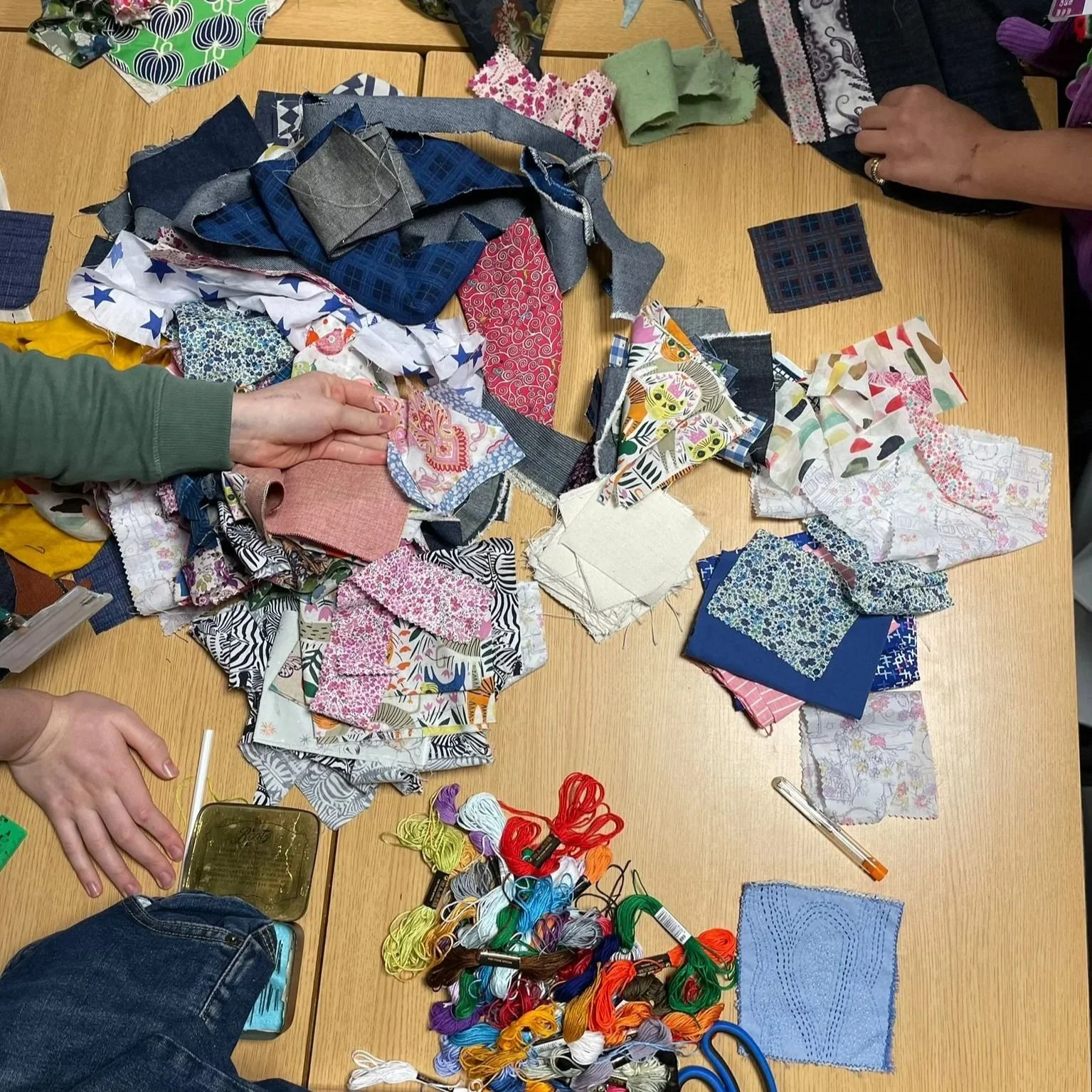
Credit: Oban Collective
Between November - March, we hosted a series of workshops for young people across Bristol that focused on the power of sewing and mending in response to the climate crisis. We explored the link between our clothing and its impact on the environment, with soaring emissions, exploitation of both people and planet resulting from the current system of overproduction.
Partnering with Bristol Textile Quarter, we delivered our ‘How To Dress In A Climate’ workshops to 65 young people aged 16-21 years old, across a variety of schools, colleges and youth organisations. We visited Trinity Academy, St Brendans Sixth Form College, Bricks Bristol and South Gloucestershire College.
The practical and engaging sessions empowered and upskilled young people with accessible practical actions that they can take to reduce their fossil fuel consumption in relation to their clothing habits. The workshops consisted of an activity that helped young people understand the link between fabric, clothing and the impact on the environment, with an interactive demonstration of some of the raw materials used to produce the most common fabrics worn today.
A discussion introduced some of the negative impacts of the fashion industry and provided tangible actions that are accessible to young people to take sustainable fashion action, including wearing second hand clothing, swapping their current clothing and repairing what they own.
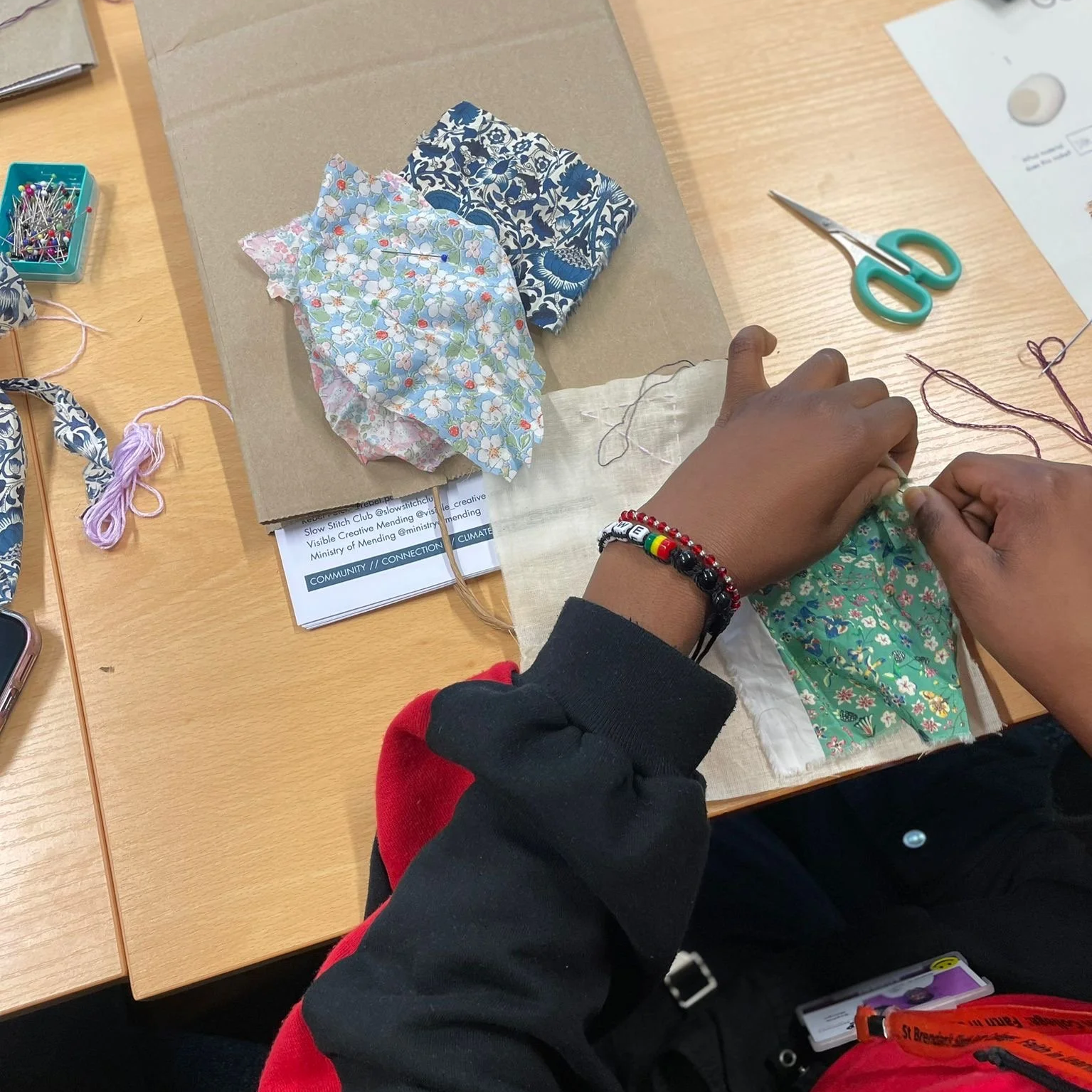
The practical elements of the workshop covered an introduction to basic sewing techniques, empowering the young people attending with the skill of hand sewing, and covered basic mending techniques such as darning and patching. Each individual completed a calico fabric “sampler” where they practiced sewing, applying layers of fabric in the Kantha and Boro styles of mending, and patching with a variety of fabrics to create a visible patch.
Attendees received an asset pack which contained a series of resources on mending techniques alongside a mini sewing pack with all of the basic essentials for on-the-go mending including needles, threads and pins. This allowed participants to continue their mending journey after the session, empowered to mend their clothing and to keep it in use for longer; essential skills for the next generation of fashion consumers.
Big thanks to the Quartet Community Foundation for the financial support to complete this project through the Megawatt Community Energy Grant.