
GOTS Roundtable & Conference
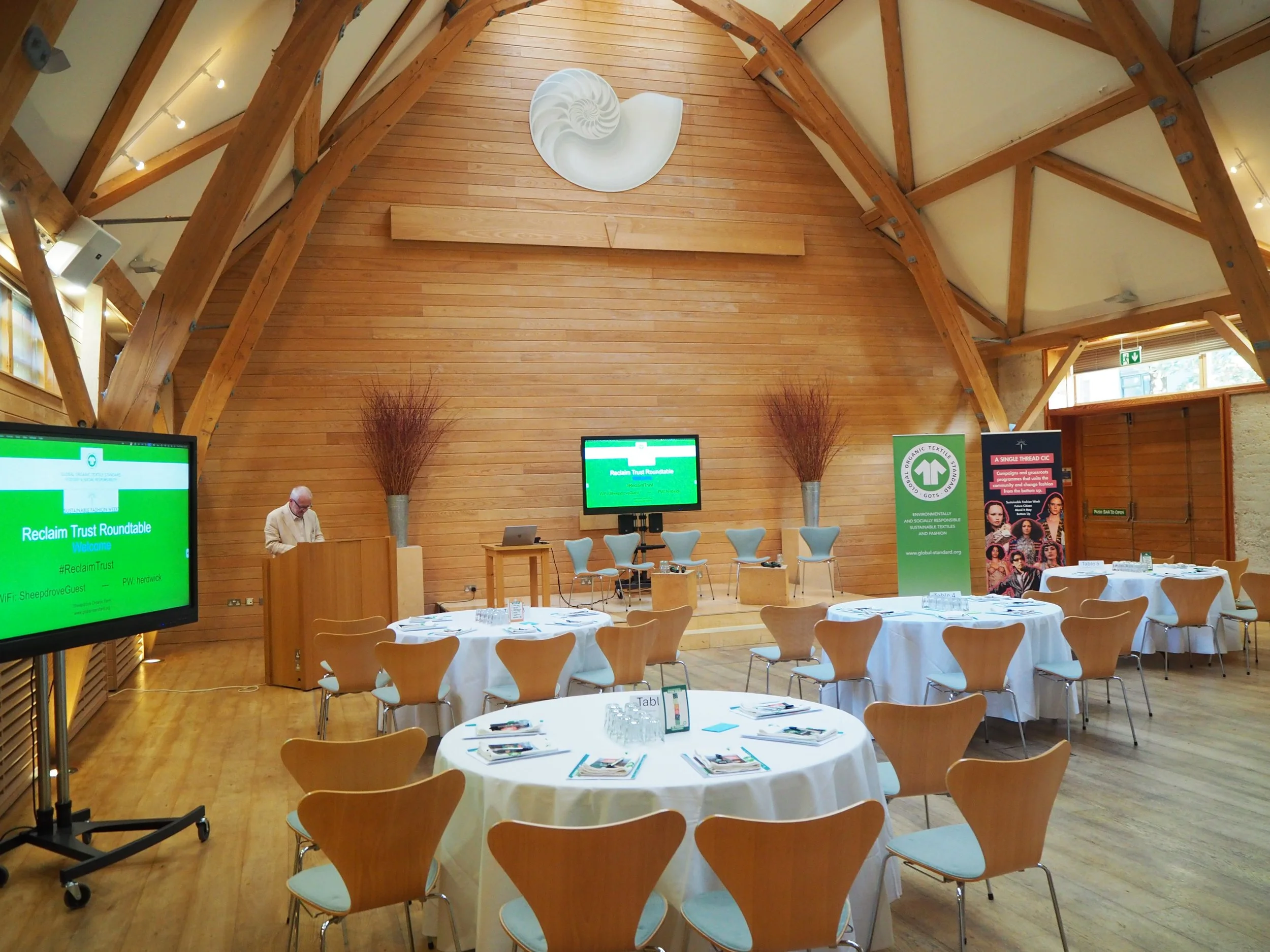
September was a whirlwind of activity for Sustainable Fashion Week and in the midst of it all, we co-hosted
Set in the gorgeous landscape of Berkshire, Sheepdrove Organic Farm was an idyllic countryside setting for an event in which the topic of trust in the fashion industry was examined and how textile standards increasingly play a key role in empowering customers to make informed purchasing decisions, in addition to minimising harm to both people and planet in the process.

Dilys Williams from the Centre for Sustainable Fashion led a keynote speech which asked us to consider how we measure trust, how it can be restored and its role in a broken fashion system.
Natasha Nickson from the Soil Association Certification, facilitated a group discussion and feedback session on the question of “what does good look like” which asked us all to consider what good fashion can mean across all areas of the industry. Through a series of provocations, each table discussed the personal choices we make relating to fashion and consumption, and how that is influenced by the information we can access regarding fashion sourcing, production and use.
An illuminating panel discussion was chaired by Tamsin Lejeune from Common Objective and featured Jen Hunter from Fernhill Farm, Katie Allen of Cotmarsh Organic Farm, Sos Stopes from GOTS and our very own Amelia Twine on the theme of “Starting with the Soil”. The session asked us to consider using the land as a starting point, and question how can we reframe our interactions with fashion and the world around us and move towards a system which is regenerative at its core.
It was inspiring to see how the leaders of regenerative agroecology are engaging students and consumers alike to forge a closer relationship with the soil and rebuilding a connection with the land, and thereby nurturing ecological stewardship in a wider sense.
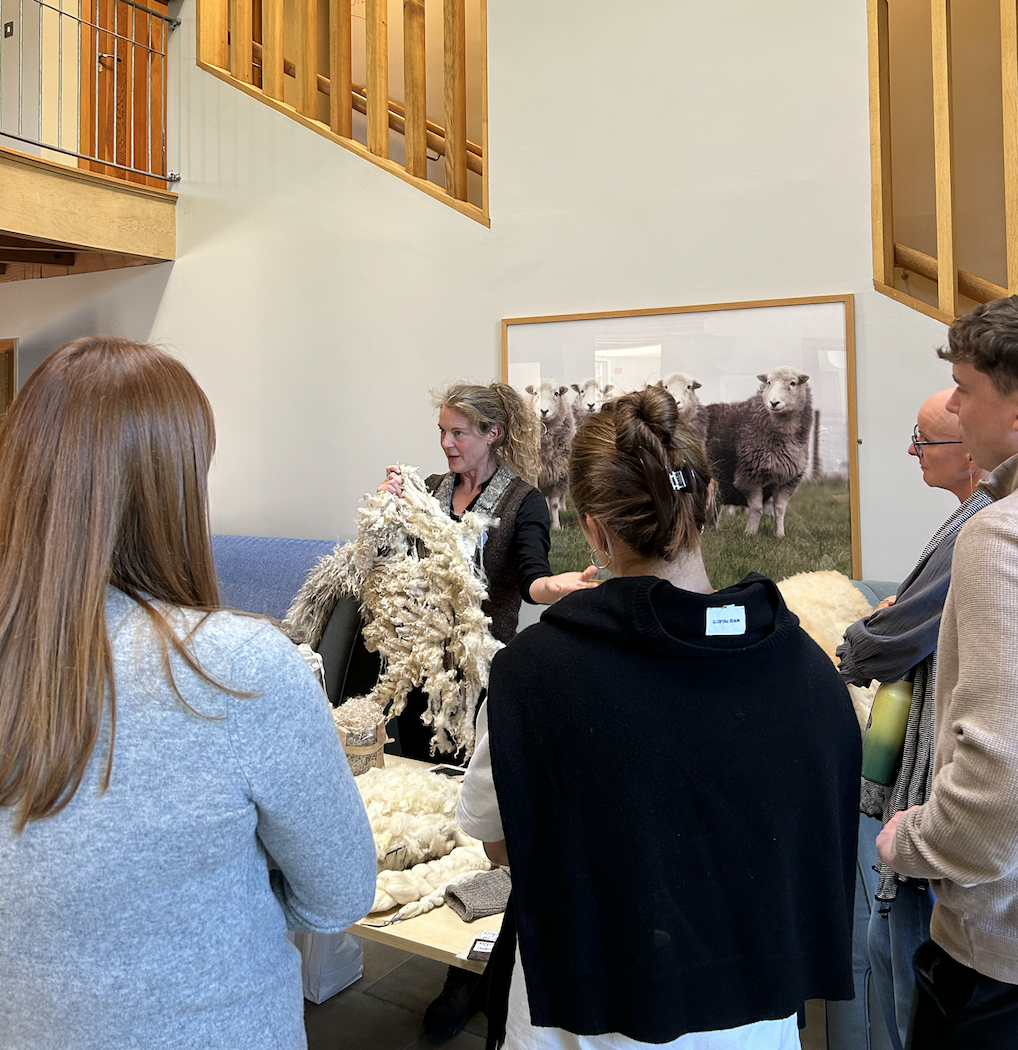
After lunch, a series of interactive demonstrations were led by Fernhill Farm, Organic Farm Systems, Great Cotmarsh Farm and Natracare, providing attendees the insight into their processes and how these brands are prioritising soil, seed, plants and animals in the production of fibre, textiles and fabric. Jen Hunter of Fernhill Farm showcased the journey of a fleece from farm to fibre, allowing guests to handle wool across its different stages and illuminating the link between the land and fabric. Katie of Cotmarsh Farm provided insight into her artisan knitwear brand which uses natural dyes from locally grown and sourced plant material. The wealth of colour and quality of Katie’s knitwear pieces was a testament to the beauty of slow fashion that follows a much closer, shorter production cycle and is made “in collaboration with nature” than that of mass produced fashion.
The final panel discussion of the day “As Close As Possible” showcased brands that are making positive strides in the fashion industry including Lucy & Yak, Frugi, Little Green Radicals and Natracare. Utilising the guidance from the GOTS standard, each brand is operating with a conscience and using ethical practices at their designing, sourcing, production and waste phases. Particularly insightful was the points made by Susie, the founder of Natracare, on the importance of the GOTS standard allowing contributors to support and advance the standard guidelines which are updated regularly to reflect changes in industry and business. Bonnie of Little Green Radicals noted how beneficial the GOTS standard has been in helping provide a “blueprint” on how to structure a garment focused business that places circular and regenerative principles at its heart.
I left the day feeling inspired by all of the action being taken by brands, makers, buyers and individuals across all stages of the fashion industry to create alternative systems of fashion that embeds nature and the health of the planet into the system of production and use. How much further could we advance change in the industry if we continuously questioned the journey of our clothing and all the touch points with nature it has made along the course of it’s production? It starts with us all to ask these questions and what impact the answers may have.
You can learn more about the GOTS standard here.