
Carnival, Creativity and Climate Action
In 2026, the East Midlands Caribbean Carnival Arts Network (EMCCAN) will collaborate with our team at A Single Thread to explore how carnival costume design can sit at the heart of sustainable clothing and textiles. This partnership recognises carnival as both a cultural force and a powerful model for creative reuse — one that already embodies many of the principles now shaping conversations around sustainability.
Across the East Midlands, carnival artists and makers have long been designing with longevity in mind. Costumes are not disposable; they can be reworked, adapted, toured and reimagined over many years. By connecting this lived practice with our wider messaging and network, EMCCAN and A Single Thread aim to amplify how carnival can inspire more sustainable approaches to making, while celebrating the joy, skill and community at its core.
The cultural value of carnival

Charis Beoku-Betts of Spice Queen Productions
As carnival artist and producer Charis Beoku-Betts, Founder of Spice Queen Productions and Director at Kala Arts CIC, describes, carnival is one of the most multidimensional art forms in existence. Its value cannot be neatly measured, because its impacts are visual, physical, social and deeply emotional. Carnival brings together costume, movement, dance and music in ways that empower participants and strengthen community cohesion.
Charis highlights the extraordinary technical skill involved in costume making — from wire bending and frame construction to intricate wearable art. In many parts of the world, carnival builders are regarded as engineers, working with materials such as steel and aluminium to create structures that are mechanically sound, visually striking and safe to wear. These skills sit alongside community-based making, where knowledge is shared across generations and experience levels.
Carnival also has a profound social history in the UK. Many carnivals were established in the aftermath of racial unrest as tools for improving race relations and creating spaces of unity. Over time, they have become places where African and Caribbean heritage is celebrated openly, while also inviting wider communities to engage, learn and participate. For diaspora communities, carnival helps maintain strong connections to ancestral cultures while creating evolving identities rooted in the UK.
Physically and mentally, carnival is transformative. Preparing for a parade involves weeks of rehearsals, costume production and collective effort. On the road, participants may walk for hours — sometimes covering over 25,000 steps — yet, as Charis notes, it rarely feels like a workout. Adrenaline, preparation and love for the artform carry people forward, reducing isolation and strengthening wellbeing through shared purpose and movement.
Sustainability in practice, not theory
Many of the ideas now associated with sustainable fashion — such as upcycled costume ideas, repurposing old clothes for costumes, and zero waste costume design — have long been embedded in carnival practice. For Charis, sustainability is often unconscious rather than performative, shaped by limited resources, shared materials and a culture of reuse.
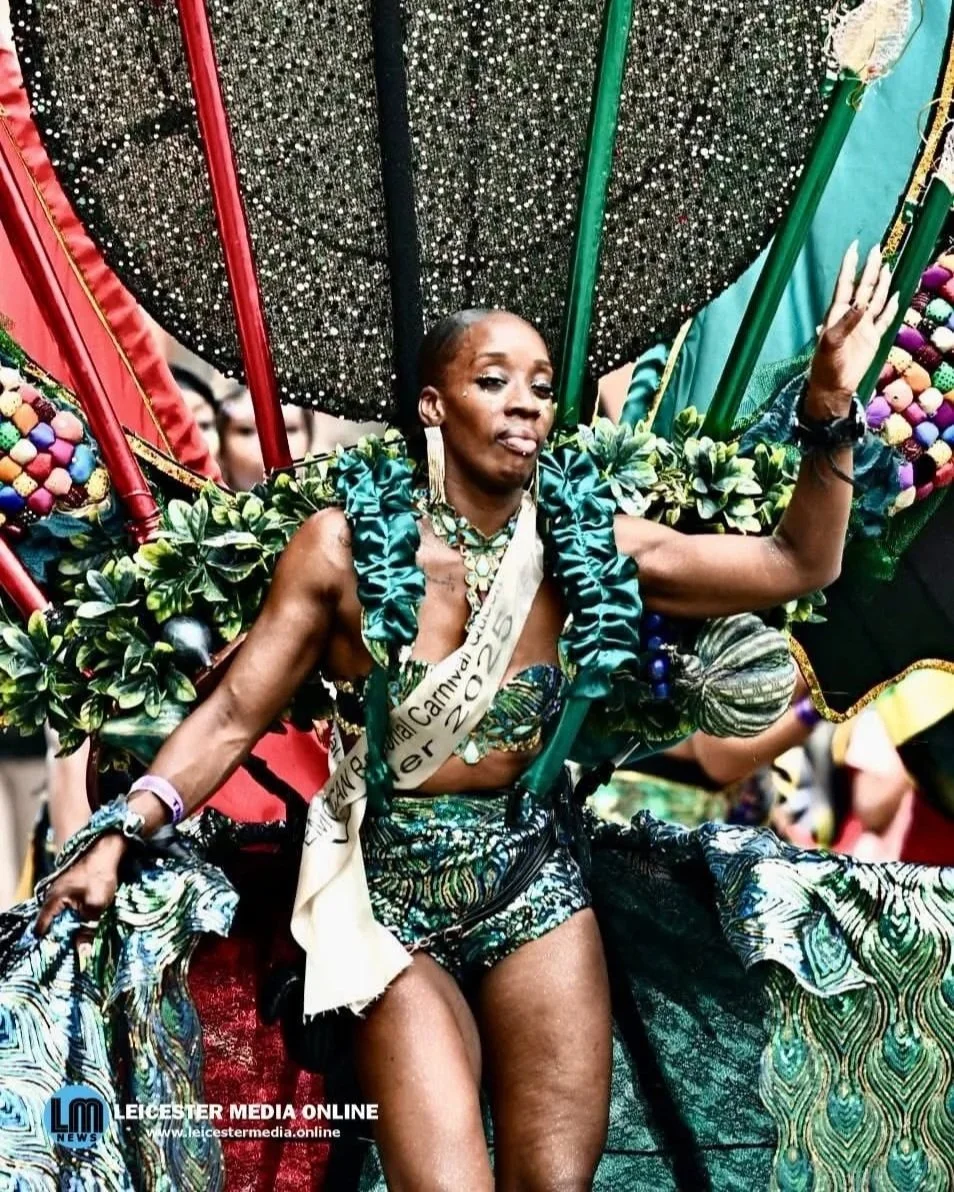
Credit: Mission Magpie
Large-scale frames and backpacks are routinely reused year after year, stripped down and adapted for new designs. Costumes are inherited, rented, toured and reworked, extending their lifespan and reducing waste. Charis recalls being taught early in her career that “there is no waste in carnival” — a principle she still lives by, with costumes made over 15 years ago continuing to support exhibitions, tours and emerging groups.
This approach aligns naturally with the use of natural fabric costume materials, reclaimed textiles and existing structures, as well as sourcing second hand clothes for costumes. Rather than starting from scratch each year, carnival makers treat materials as evolving assets, allowing creativity to grow through constraint.
Artist Sim Mistry of Kala Arts CIC reflects on how community-led upcycling sessions transformed broken costumes into striking new artworks. What began as practical reuse quickly became a process of empowerment, with participants taking ownership and leadership. For Sim, sustainability ensures that the story of carnival continues to transform lives — reminding us that what we consider waste is only limited by imagination.
The Carnival Swap Shop – 31 January, Leicester
The collaboration begins with a Carnival Swap Shop on 31 January in Leicester, bringing EMCCAN members together to exchange costumes, textiles and creative materials for the 2026 season. The event encourages makers to explore recyclable costume ideas, thrifted finds and reclaimed fabrics, while sharing skills, templates and inspiration.
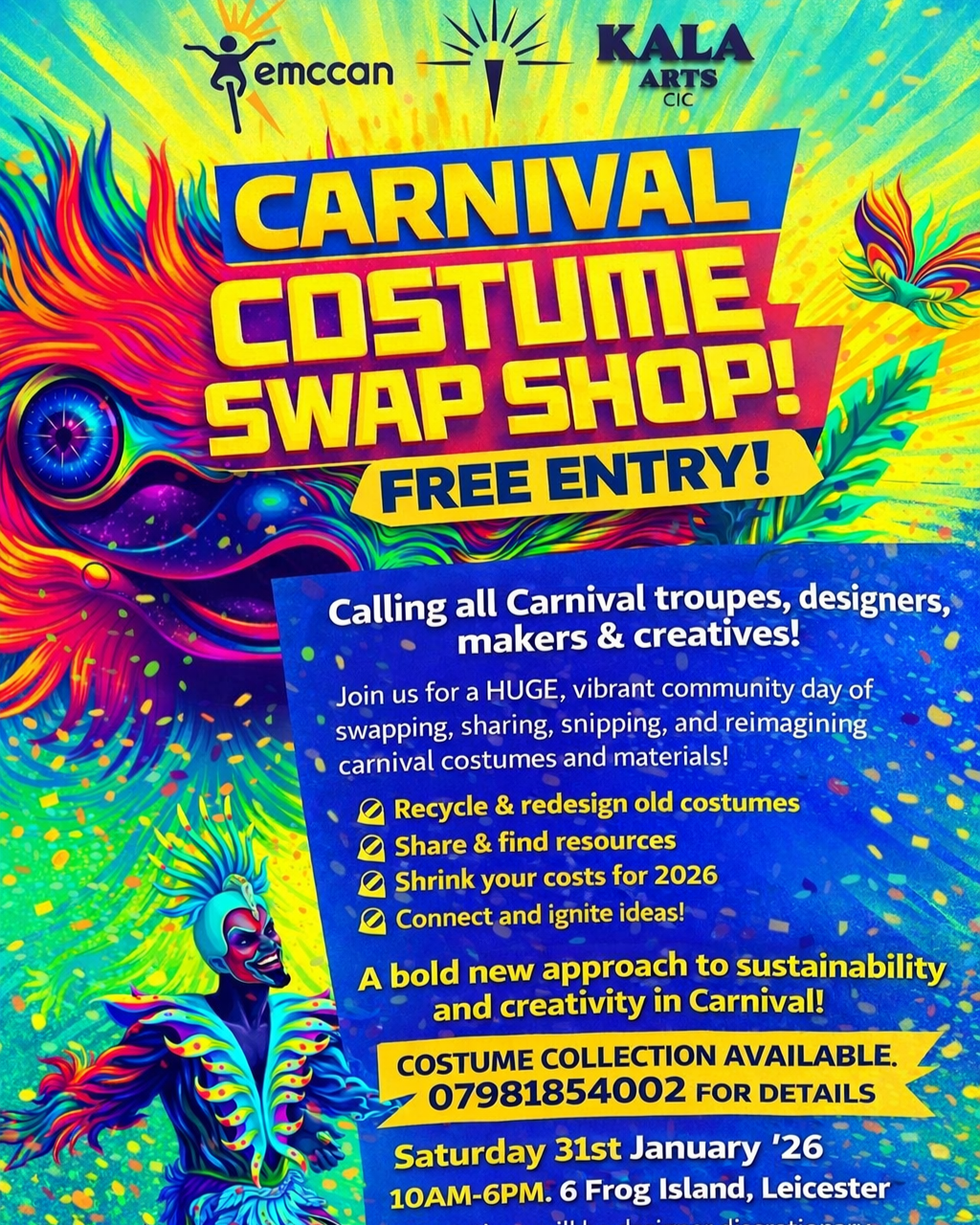
Visually, the Swap Shop will reflect carnival’s layered history: feathered headdresses alongside bare frames, fabric panels ready to be transformed, and well-loved costumes prepared for their next incarnation. It is as much about conversation and connection as it is about materials.
The Swap Shop is hosted by practitioners deeply committed to sustainable practice. Emma, founder of Inspirational Arts, brings over 25 years of experience across carnival and outdoor arts. After becoming increasingly disheartened by the waste produced by one-day events, she shifted her practice towards reuse and responsible material choices, believing artists must consider the full lifespan of their work.
Joining her is Rebecca Harvey-Hobbs, a mixed-media artist and founder of Mission Magpie, an arts centre dedicated to giving discarded materials a second life. Her 2025 Regional Queen–winning costume demonstrates that sustainability and excellence are not opposing forces, but complementary ones.
Looking ahead
From February to June, EMCCAN members will design costumes inspired by the SFW 2026 theme, followed by a costume competition in July and a celebration during Sustainable Fashion Week in September. Throughout the year, the collaboration will be documented through storytelling, highlighting how carnival continues to lead by example — proving that sustainable making can be joyful, inclusive and deeply rooted in culture.